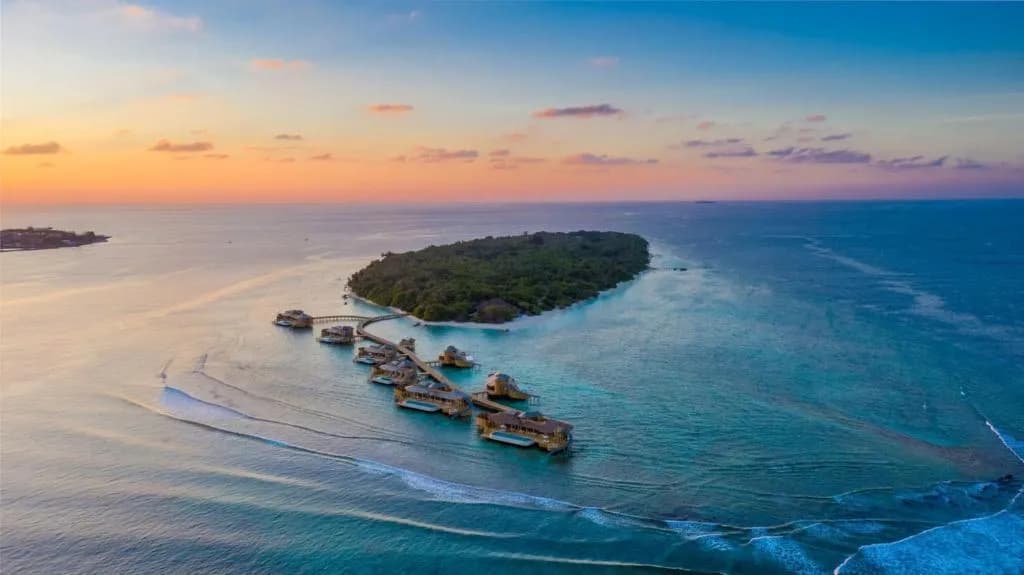
Soneva Fushi
Eco-luxury that holds up to the inspection it invites, operationally specific, editorially honest, and slow enough to be worth the airfare.
Soneva Fushi is the original resort of its kind in the Maldives and, three decades on, still the most editorially honest. It sells the absence of things, no shoes, no news, no television, no piped music, and unlike the imitators who use the same phrases, it actually delivers them. The water in the villas is bottled on the island; the glass studio behind the kitchen melts down the resort's waste into the next dinner's wine glasses; the carbon levy on every booking goes to a published, audited fund. Whether the nightly rate is worth it is a separate question, and one this page will answer when we have a verified partner feed.
Setting
Soneva Fushi occupies the entire island of Kunfunadhoo on the southern edge of Baa Atoll. The island runs roughly two kilometres long and four hundred metres wide at the broadest point, dense with banyan and screwpine forest, with the resort villas tucked along the shore on both eastern and western edges. The interior reads more as a small jungle than a manicured resort garden, which is deliberate. Most paths are sand; transport on the island is by bicycle.
The island sits within the UNESCO Baa Atoll Biosphere Reserve, designated in 2011, and on the right tide is a 25-minute boat from Hanifaru Bay, the world's largest reef manta aggregation site. The house reef is a fringing patch on the lagoon side of the island, accessible by walking off the beach; the outer reef edge sits a five-minute boat ride beyond. The atoll itself is one of the country's central groups and the resort cluster around it (Anantara Kihavah, Four Seasons Landaa Giraavaru, Vakkaru, Amilla, Milaidhoo) defines the upper-tier Baa experience.
Who it's for
- Travellers who plan eight to twelve nights at one resort and pace it deliberately. The island rewards slowness; arriving for five nights and trying to optimise is the wrong shape for the place.
- Couples or families with older children (8+). The kids' programme has substance, marine biology sessions with the on-island team, glass studio workshops, a dedicated teen space, but the social design assumes children who can entertain themselves part of the day.
- Readers who care whether the sustainability claims are real. Soneva publishes a yearly impact report with numbers behind the language; for the rest of this tier, the language stands alone.
- Eaters who notice. Six restaurants, one open-air cinema with dinner served on the sand, a wine list that includes a 2009 Échezeaux. The food programme is intentional, not incidental.
Who it isn't for
- Travellers on a fixed five-night honeymoon. The island is designed for two-figure stays. Five nights here will read as expensive transit.
- Couples who want late nights and a bar scene. Music ends early. The vibe is observatory, not nightclub. If your honeymoon picture is a sunset DJ set, look at Niyama or Finolhu instead.
- Families with three or more children needing connecting rooms. The villa stock is configured for parties of two to four; the family villas exist but the inventory is limited and the rate jumps sharply.
- First-time visitors who want a one-resort introduction to the country. Soneva is unrepresentative of the broader Maldivian resort experience, too specific, too crafted. Start somewhere mid-tier and graduate here on a return trip.
The villas
Soneva's villa nomenclature is unconventional, categories number into the double digits and the language is deliberately spare (Crusoe Suite, Cinema Paradiso). The table below lists the categories that actually drive most bookings; the resort can pitch the rest on enquiry.
| Villa | Size | Sleeps | Pool |
|---|---|---|---|
| Crusoe Residence 1 BR | 411 m² | 2 | Yes |
| Crusoe Residence 2 BR | 525 m² | 4 | Yes |
| Soneva Fushi Villa 4 BR | 880 m² | 8 | Yes |
| Cinema Paradiso Water Retreat | 360 m² | 2 | Yes |
| Private Reserve 9 BR | 4000 m² | 18 | Yes |
Food & drink
There are six dining venues on the island and a seventh that operates seasonally. The point worth making first: this is one of the few Maldivian resorts where the food is not the weakest part of the price. Out of Blue is the standout, a wood-fired Japanese counter on a deck above the lagoon, with sashimi sourced from boats that came in that morning. Mihiree Mitha is the all-day venue and handles breakfast better than dinner; come early, eat slowly.
The wine programme is the most intentional in the country. The cellar runs to about 12,000 bottles, with a particular weight in Burgundy. Pairing dinners with the resident sommelier are bookable and worth the upcharge if you care; the markup on the by-the-bottle list is closer to fair than the typical resort. Cocktails are correct but unspectacular, drink wine. Readers whose holiday is the cellar-as-anchor brief should also read the Underground Wine Cellar food programme at Gili Lankanfushi (smaller 500-reference cellar but stronger sommelier-tasting structure) and the Tavaru cellar setting at Velaa Private Island (8,000 references and the country's most architecturally distinctive wine tower).
Outdoor cinema runs nightly under a screen rigged in the trees; dinner arrives during the film on individual sand-tables. It sounds like a gimmick and isn't, the timing is calibrated, the menu is calibrated, the film selection is calibrated. If you skip it on the first attempt, do it on the second.
Diving and the house reef
The house reef sits about 80 metres from the beach on the lagoon side and is alive in a way the resort's marketing pictures cannot capture. Sightings reported across the last three seasons of dive logs include reef manta, hawksbill turtle, blacktip reef shark, dogtooth tuna, and the predictable cast of butterflyfish and surgeons. Visibility runs to 25 metres in the dry season and drops to about 15 in the wet.
The PADI 5-star centre runs two boat dives daily plus afternoon snorkel runs to nearby sites. Hanifaru Bay is the marquee draw, between August and November the manta aggregation peaks, and the resort runs morning permits in 45-minute windows. The boat from Soneva is about 25 minutes; the experience is regulated (no fins, snorkel only, ranger-supervised) and the wait list builds during peak season. Book ahead.
Critique: the dive operation is competent rather than exceptional. If diving is the primary purpose of the trip and you want a more dive-focused programme, the small operator next door (Dhonimighili) runs a more committed schedule, and the Six Senses Laamu programme to the south is sharper still.
Spa and wellness
The Six Senses Spa partnership shaped the wellness identity of the resort for almost two decades; Soneva ended that partnership in 2018 and rebuilt the spa under its own name, retaining the practitioner roster. The current Soneva Spa is built into the forest interior of the island, with treatment pavilions raised on stilts beneath the canopy. The arrival ritual runs a full hour before treatment begins, which is unusual for the Maldives but consistent with the resort's overall pacing.
Programmes run from single treatments (the standard 60-minute and 90-minute massage, facial, body-scrub menu) to multi-day wellness arcs that integrate with the resort's nutritionist, the Marine Biology team, and the resident astronomer. The most regularly booked offering is the seven-day cleanse, which combines body work with Ayurvedic consultation and a tailored kitchen plan; advance booking is required.
An honest caveat: the spa is heavily booked during peak season (December through February). If a treatment is part of the reason for the trip, request your slots at the time of confirming the reservation, not on arrival. The waiting room runs into days at Christmas.
Activities and the on-island programme
The activity programme at Soneva Fushi is the most editorially distinctive of any resort in the country, because the things on offer are not the things on offer everywhere else. Cinema Paradiso, the open-air cinema rigged in the trees, screens a curated programme of films four to six nights a week with dinner served on individual sand-tables. So Hands On, the resort's craft pavilion, offers daily glass-blowing classes drawing from the same studio that recycles the resort's waste glass. The on-island observatory operates with a resident astronomer who runs guided sessions on the larger telescopes.
Marine programmes are the structural anchor. The Marine Biology team runs a daily snorkel programme on the house reef and weekly manta-snorkel expeditions to Hanifaru in season (August through November). They also run a turtle conservation programme, and guests can join the morning reef-health surveys. AquaTerra, the on-island coral conservation and marine-science centre opened in March 2023, anchors the team's work and runs visitor programmes across most weeks. None of this is theatre. The team publishes research, the data goes into the atoll's biosphere monitoring framework, and the encounters are unscripted.
Smaller distinctive offerings: the Chocolate Room, with on-demand cacao service across the day; the ice-cream parlour, which makes its product from the on-island dairy programme; the Soneva Picnic, a half-day private-sandbank dispatch with a chef. The bicycle programme is the underrated one. Every villa is allocated bicycles; the island is large enough that the easiest way to traverse it is to ride, and the forest paths are flat and shaded throughout.
Getting there
The transfer is by 40-minute seaplane on Trans Maldivian Airways, operating between roughly 06:30 and 16:00 local. Late arrivals into Velana, anything landing after about 14:30, typically overnight at the airport hotel and fly the next morning. The resort coordinates this and absorbs part of the cost; ask the reservations desk.
Round-trip seaplane charge for the resort transfer is quoted at the time of booking; the figure changes seasonally and we do not duplicate it here. Children under 12 are charged at roughly half the adult fare. Infants travel free but are not seated. The seaplane experience itself is part of the holiday, sit on the right side flying out, the lagoon shots are better. Noise is significant; bring real earplugs, not the supplied foam ones.
Visa: most nationalities receive a free 30-day visa on arrival. Passport must be valid six months past entry. Departure tax is included in the airline ticket since 2016 and does not need to be paid separately at the airport.
Best time to visit
The Maldives runs a wet-and-dry weather cycle rather than a four-season cycle, and Baa Atoll inherits the national pattern. Roughly: December through April is the dry season, with the lowest realistic chance of multi-day rain; May through November is the wet season, with more frequent showers and the southwest monsoon shaping the sea state. Both seasons see warm air and sea temperatures around 28°C.
For Soneva Fushi specifically, the strongest window is late February through mid-March. The weather sits at peak dry, the December-January rate spike has passed, and the resort is well into its post-Christmas operational rhythm. Couples on a honeymoon book most heavily for this window; advance reservations are advisable from roughly six months out for the larger villa categories.
The manta-aggregation window (mid-August through early November, with peak reliability in late September and October) is the second-best reason to come. Rates are noticeably lower than December and February peaks, the sea is warmer, and Hanifaru Bay runs daily permit windows. The trade-off is occasional heavy rain showers (rarely full days) and the chance that wind will shut Hanifaru for a day or two during the stay. For a marine-event-centric trip, this is the window.
Worst window: June, when the southwest monsoon is fully established, rates remain mid-high because European school holidays have started, and Hanifaru access is intermittent. The combination is unfavourable. Late November and early December occasionally produce a dead-quiet, beautifully-weathered window that the rate-finder algorithm misses; if you can hold flight bookings flexibly, this is the contrarian's pick.
Sustainability, the numbers
Soneva publishes an annual sustainability report with audited numbers. The 2024 report (most recent available) records: 75% of waste recovered or recycled on-island; the in-house glass studio reuses approximately 14,000 bottles per year; solar contributes about 24% of operational electricity, with diesel still the larger share; potable water is desalinated and bottled in glass on-island, eliminating an estimated 6 tonnes of plastic per year. A new renewable energy build was added in early 2025; the updated share will appear in the next impact report.
A 2% carbon levy is added to every guest bill. The Soneva Foundation publishes how the levy is allocated. Current programmes include mangrove planting in Bangladesh and clean cookstove distribution in Myanmar. Whether you trust the offsets is a matter of preference; what is unusual here is that the math is published at all. Across the eco-luxury tier this is the exception, not the norm.
Where the picture gets harder: the seaplane transfer to a remote atoll is unavoidably fuel-intensive, and no amount of in-resort recycling neutralises that. A long stay (eight nights or more) amortises the transfer more efficiently than a short one; this is one of the few resorts where staying longer is the more sustainable choice as well as the better-paced one.
In May 2025 KSL Capital Partners took majority ownership of the Soneva group and the founding Shivdasani family stepped fully out of operating control. The reports, the levy mechanism, and the Foundation programmes were all set up by the founders; whether the new ownership maintains the same posture under the same numbers is the next two-year question for this site. We will revisit when the post-transition impact report lands.
For the eight-to-twelve-night traveller who can stomach the bill that Soneva sets at its tier, this is the most reliable choice in the country. The eco-luxury claim survives scrutiny in a way that none of its imitators' do. The honest cap: this is a stay paced for slowness; a couple looking for buzz, an over-water-bar scene or a dive-every-morning intensity will fit better at Niyama or Six Senses Laamu respectively. Five nights here will read as expensive transit.
Gallery
Photographs come from each resort's own communications and operator-supplied media kits. Operators retain ownership; takedown requests are honoured on email. Click any tile to view it full size.
Alternatives we would also recommend
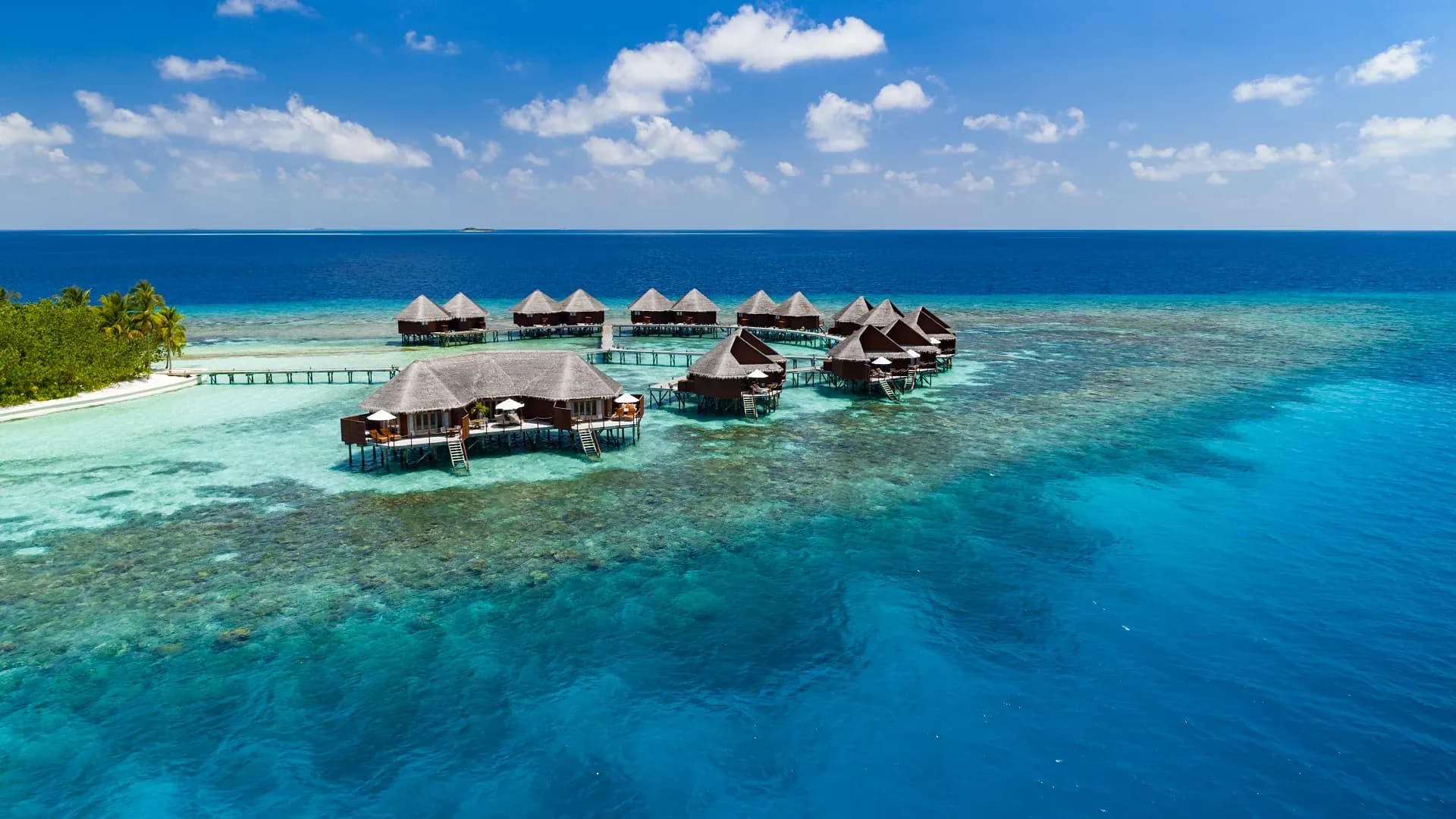
V Villas Maldives at Mirihi
Small and quiet on the South Ari island of Mirihi: 42 villas under Accor's MGallery, design-led rather than eco-led, with a house reef on the same shortlist as Soneva's.
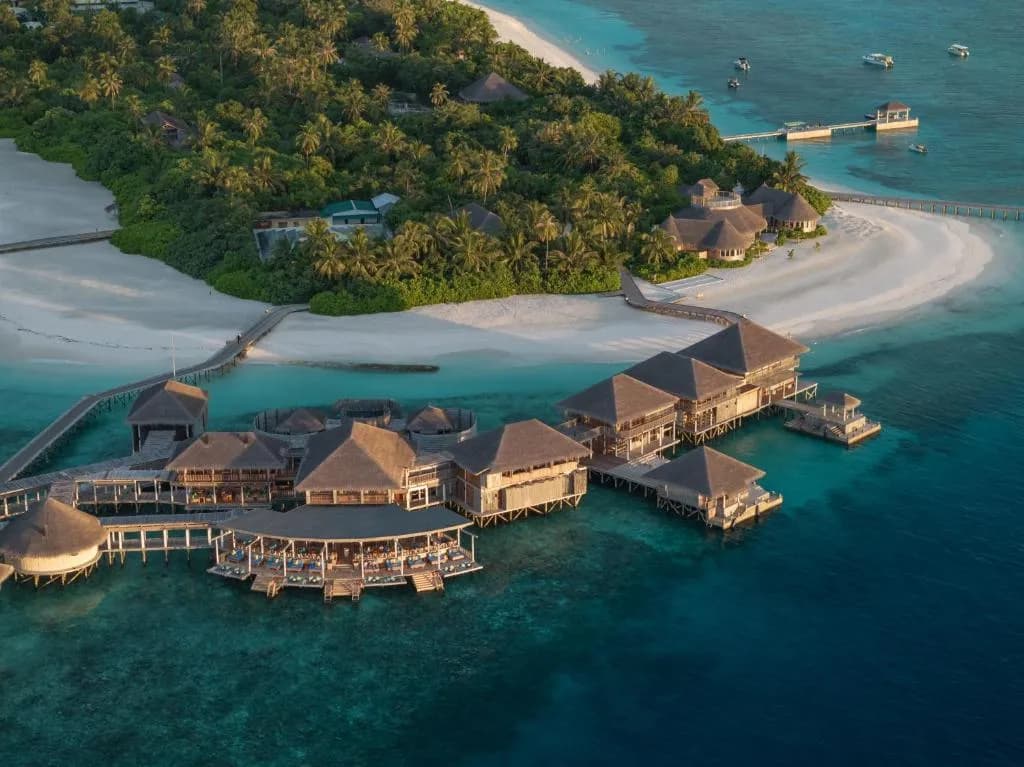
Six Senses Laamu
The southern sibling. Better diving, better surf, slightly less polished service, more interesting marine biology programme.
Check rates on Expedia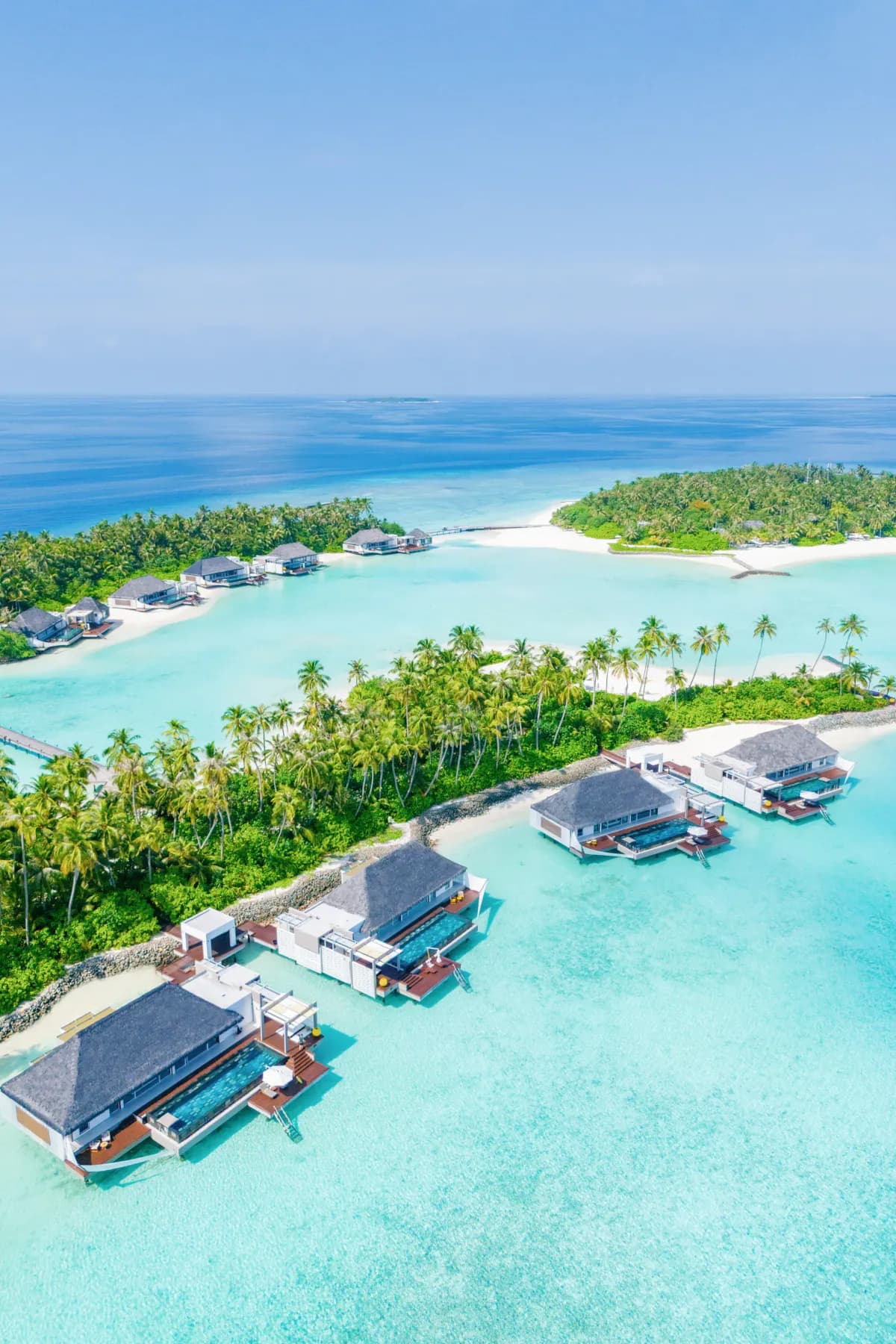
Cheval Blanc Randheli
Different aesthetic, French luxury house, Jaume Plensa sculptures, a Guerlain spa. No greener-than-thou language. Service polish at the top of the country's tier.
Check rates on ExpediaHead-to-head comparisons
Frequently asked
- Can I do Soneva Fushi as a five-night trip?
- You can, but you shouldn't. The island is paced for stays of eight nights and longer; five nights with the seaplane transfer at both ends produces three usable days in the middle. The cost-per-usable-day calculation gets uncomfortable. If five nights is the budget, look at the lower-cost Baa properties such as Vakkaru or Amilla, which share the same Hanifaru Bay manta permit, instead.
- Is there a children's programme, and what's the age range?
- Yes. The 'Den' kids' club covers ages 4 to 11; the Eco Pro programme covers 11 to teen. Both have substance, marine biology sessions, glass studio time, an astronomy programme with the island's resident observatory. Under-fours are accommodated in-villa with a nanny but there is no group programme.
- What's the dress code at dinner?
- Resort casual everywhere. No jacket required at any venue. Out of Blue (the Japanese counter) is the only place where booking ahead is essential; the rest accept walk-ins and the staff steer you between them on multi-night stays.
- Is the house reef good enough that I don't need to dive elsewhere?
- For snorkellers, yes. For divers, no, you'll want at least one trip out to a Baa Atoll pinnacle and, in season, a Hanifaru Bay morning. The dive centre handles both. If diving is the primary purpose of the entire trip, Six Senses Laamu or a liveaboard is the better answer.
- What's the connectivity like?
- Wi-Fi is genuinely island-wide and reliable. There are no in-villa televisions and the no-news ethos is taken seriously; if you want to follow live sports or news, the lobby bar has a single screen that's switched on for major events on request. Phone reception is fine.
- Is the carbon offset claim credible?
- The math is published and the offset projects are real. Whether voluntary carbon offsetting fully neutralises the seaplane transfer is a contested question across the field; the honest answer is partially, not fully. The longer your stay, the smaller the per-night transfer footprint, and Soneva is one of the few resorts that publishes the calculation rather than just the claim.
Last verified 2026-05-27. Next refresh 2026-08-27. Edited by Linus Halberg.