Anantara Kihavah vs Soneva Fushi, the Baa Atoll choice
Affiliate links: we may earn a commission if you book, at no cost to you. It does not affect our editorial line.
What the two resorts share
Both Anantara Kihavah and Soneva Fushi sit inside Baa Atoll, which means both share the country's only UNESCO Biosphere Reserve designation and both are within a 30-minute boat of Hanifaru Bay during the August-to-November manta-aggregation window. The atoll itself does the heavy lifting on marine event timing; the choice of resort is shaped by everything else.
Both are 30 to 40 minute seaplane transfers from Velana on Trans Maldivian Airways, both on the daylight-only operating window, and both with the same airport-hotel-overnight fallback for late international arrivals. Transfer math is identical between them.
Both run a marine biology programme of substance, though the depth of programming differs. Both operate dive boats with daily two-boat schedules. Both have access to the same outer-reef sites and the same Hanifaru permit windows. The atoll context is shared.
Where they diverge: philosophy and the headline product
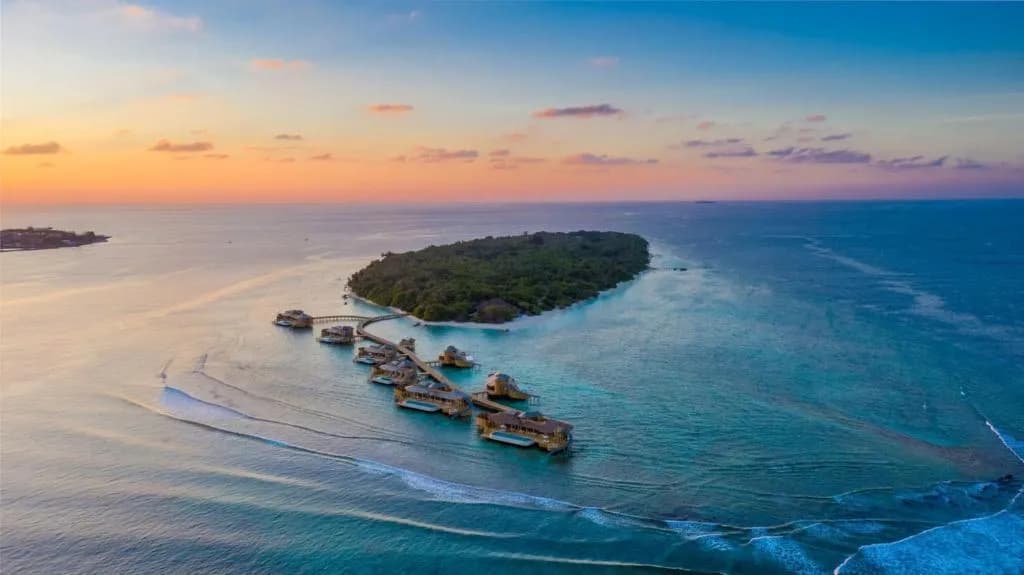
Soneva Fushi is the eco-pioneering chain. The framework Soneva published in the late 1990s and refined over the next two decades is the sustainability vocabulary the country's eco-luxury tier now operates inside. The carbon levy on every bill, the on-island glass water bottling, the audited annual impact report, the jungle-island shape with beach villas as the headline product, these define what Fushi is.
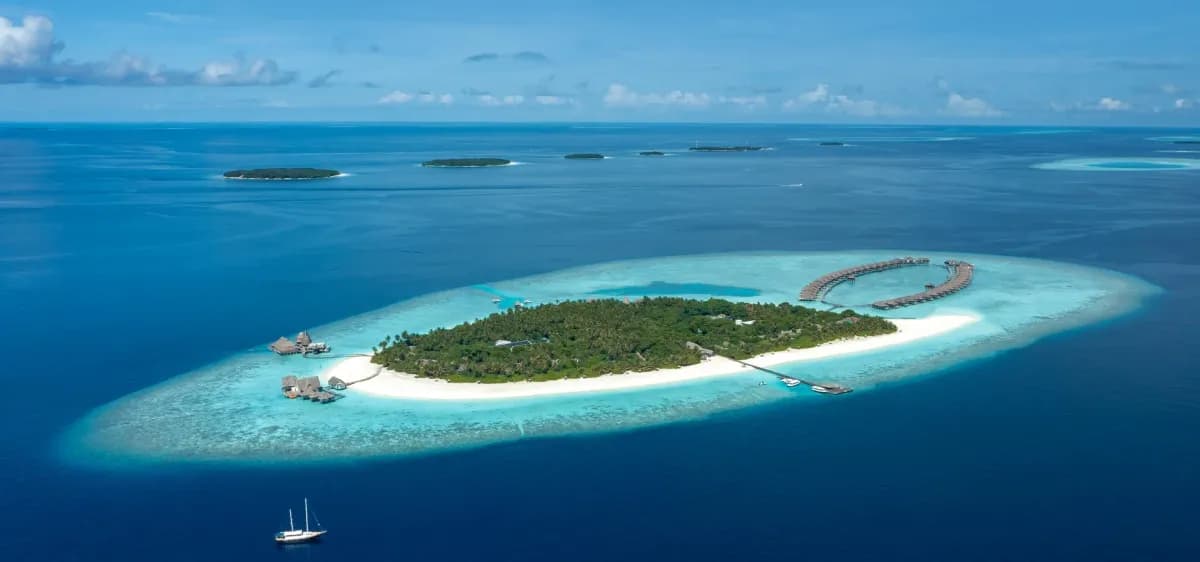
Anantara Kihavah is the polished chain answer to the same brief. The headline product is the over-water villa with SEA, the underwater restaurant downstairs at sea level (Conrad's Ithaa opened first, in 2005, but SEA pairs the room with the country's first underwater wine cellar). The chain framework runs the property to consistent Anantara service standards, and the trip-report data shows fewer operational hiccups at Kihavah than at the typical eco-luxury tier.
If the brief is the eco-philosophy, Fushi is the canonical answer. If the brief is the over-water photograph with a unique dining anchor and consistent service, Kihavah is the answer.
The villa stock difference
Soneva Fushi's inventory is land-side heavy. The 63 villas are dominated by Crusoe Residences and beach-side categories with private pools and jungle interiors; the over-water inventory is a smaller share of the total. The Cinema Paradiso Water Retreat is the over-water exception that gets photographed, but most Fushi guests stay on the beach side under the canopy.
Anantara Kihavah's inventory inverts the ratio. The 82 villas at Kihavah are mostly over-water, with the Over-Water Pool Villa as the headline category and the beach-side residences as the family-occupancy option. The under-deck water at Kihavah is patchy: some villas sit over live coral, some over dredged channel, and the under-deck shifts seasonally with the lagoon current.
Recommendation: for the over-water photograph as the trip's defining feature, Kihavah. For the jungle-immersive land-side experience, Fushi. Couples who specifically want the under-deck reef experience should ask Kihavah for the most recent reef-monitoring photograph under the villa category before confirming the booking.
Food, dining, and the underwater restaurant question
Soneva Fushi runs six on-island dining venues. The standout is Out of the Blue, the wood-fired Japanese counter on a deck above the lagoon. The wine programme is one of the country's deepest, the cellar runs to about 12,000 bottles with serious Burgundy weight. The outdoor cinema with dinner served on individual sand-tables is part of the dining identity rather than a separate offering.
Anantara Kihavah's signature dining offering is SEA, the underwater restaurant. The Kihavah experience is intentional: descend into the partially-submerged glass dining room four metres below the lagoon surface, served by a tasting menu that runs about two hours, with reef fish circulating beside the table. The novelty wears off in a single dinner; book it once on the trip, then return to surface-level dining for the rest of the stay. The other on-island restaurants are competent but not the chain's strongest food work.
Honest reading: Fushi's food programme is deeper and the wine programme is materially more ambitious. Kihavah's food is the underwater restaurant plus a competent supporting cast. If the trip is for the food, Fushi. If the trip is for the one definitive dining event, Kihavah. Both can be combined on a two-resort split-stay.
Diving and the marine programme
Both properties have access to the same outer-reef Baa Atoll dive sites. Anantara Kihavah's house reef on the northern side of the resort island is genuinely strong and accessible from the water-villa boardwalk. Soneva Fushi's house reef on Kunfunadhoo island is patchier in places but the dive boat routes out to better sites quickly.
Marine biology programmes: Soneva Fushi's team is engaged with the Baa Atoll biosphere monitoring framework and contributes to the atoll-wide protected-area research. Kihavah's marine biology programme is competent and runs daily snorkel programming with structured fish ID; it sits below Fushi on research depth.
Both run the August-November Hanifaru permit window with daily morning boats. The experience is the same; the atoll regulates the permits and the resort delivers the boat. For the manta event specifically, both work.
Sustainability lineage and what is published
Soneva Fushi's sustainability work is the country's deepest. The 2% carbon levy, the glass studio, the in-house water bottling, the audited annual impact report, the published audit URL, all of these started at Fushi and define what eco-luxury credibility looks like in the Maldives. The framework has compounded over 28 years.
Anantara Kihavah operates within Minor Hotels Group's environmental policies; it does the practical work on plastic reduction and energy efficiency, but it does not publish a property-specific impact report at the Soneva depth, and it does not run a carbon levy on the bill.
For a reader who specifically wants the audited eco-luxury framework, Fushi is the unambiguous choice. For a reader who wants the work done without the framework as a marketing pillar, Kihavah is fine.
The verdict in one paragraph
Soneva Fushi is the deeper editorial choice with the longer sustainability lineage, the stronger food programme, the jungle-island shape, and the eco-philosophy that survives scrutiny. Anantara Kihavah is the photogenic over-water-led alternative with the underwater restaurant as the trip's defining experience and the consistent chain-hotel service standard. Same atoll, same manta window, opposite resort personalities. Pick by which brief matches your trip rather than by which is better.
The recommendation matrix
Read the row that matches your shape of trip. The pick is what we would book given the constraints, with the one-line reason.
| Situation | Pick | Reason |
|---|---|---|
| First Maldives trip, over-water photograph as the priority, six to eight nights | Anantara Kihavah | Kihavah's over-water inventory + the SEA underwater restaurant give the photograph plus the one definitive dining event. |
| Eco-luxury readers who want the published audit framework | Soneva Fushi | Soneva Fushi's 28-year sustainability lineage and the audited annual impact report are the unambiguous match. |
| Family of four with two children under twelve, ten nights, August | Soneva Fushi | Fushi's kids' programme depth, larger land-side villa stock, and Hanifaru proximity together. |
| Couple on a five-night honeymoon, December peak | Anantara Kihavah | Kihavah reads more cleanly at five nights; Fushi's pacing punishes the shorter stay. |
| Serious eater + wine drinker, eight nights, March | Soneva Fushi | Out of the Blue + the Fushi wine cellar collectively outweigh Kihavah's underwater restaurant for a food-led trip. |
| Travellers who want the underwater restaurant experience as the trip's anchor | Anantara Kihavah | Only Kihavah has SEA. Book it for one night and the rest of the stay around it. |
| Two-resort split-stay readers who want both | Either | Pair them: four nights at Kihavah then six at Fushi, or the reverse. Same atoll makes the inter-resort boat transfer feasible. |
Affiliate links: we may earn a commission if you book, at no cost to you. It does not affect our editorial line.