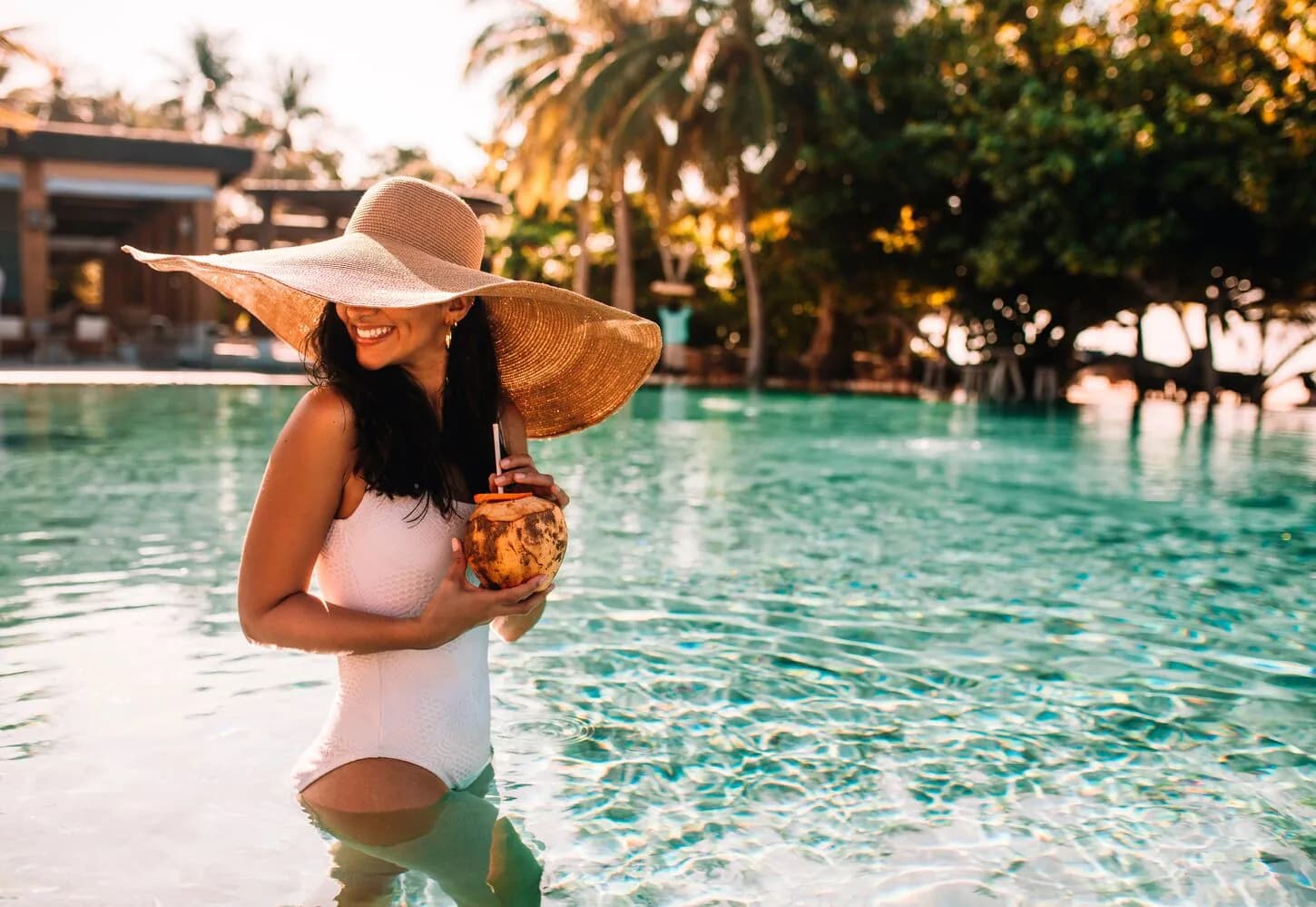
JOALI Maldives
An art-led ultra-luxury resort in the country's far north, with commissioned contemporary work integrated into every space and the strongest single-property art programme in the Maldives.
JOALI Maldives sits on Muravandhoo island at the northern edge of Raa Atoll, a 45-minute seaplane from Velana and far enough north that the property functions in a different atoll cluster from the central-Maldivian luxury cohort. The brief is unambiguous: contemporary art as the spine of the design language rather than a decorative overlay. The operator commissioned site-specific work from Studio Glithero, Misha Kahn, Porky Hefer, Kamruzzaman Shadhin and a roster of other international artists at construction; a guest who walks the property reads it as a curated outdoor sculpture park as much as a resort. The food programme, the spa pavilion, the villa interiors all integrate the art programme rather than presenting it as a side gallery. The reader's real decision is whether the art-led aesthetic is the differentiator they came for, or a feature they will pay for and walk past.
Setting
Muravandhoo is a mid-sized island for the Maldives, roughly 600 metres long, with a clean horseshoe shape that gives the property a long sweep of beach along its outer arc and a calm protected lagoon on the inner side. The land footprint is enough to deliver a genuine walk-the-island routine; the over-water boardwalks extend from the southern tip toward the reef edge.
Raa Atoll itself is one of the country's quieter northern atolls, with comparatively few resort properties and a strong local-island fishing economy still intact. The atoll's reef condition advantage over the central-atoll cluster has driven new property development in the last decade; JOALI sits at the higher end of that wave.
Critique: the sunset axis at Muravandhoo is good but not exceptional. The orientation places the long beach on the eastern side, which is the morning side; guests booking specifically for sunset should request a Sunset Water Villa or a sunset-facing beach villa at the time of confirmation.
Who it's for
- Couples who follow contemporary art with intent. The commissioned programme at JOALI is the country's most substantial; readers who would visit a property primarily for a Studio Glithero pavilion or a Porky Hefer treehouse find the trip's main draw here.
- Travellers who want a property-unique aesthetic rather than a chain-coordinated one. JOALI does not look like any other Maldives resort; the design language is its own, and that uniqueness is the point.
- Honeymoon and anniversary stays of seven to ten nights where the brief is to read a curated environment slowly. The art-tour programme, the integrated dining, and the wellness pavilion reward a paced visit.
- Returning luxury guests who have already done the chain-coordinated tier (Four Seasons, Cheval Blanc) and want something the global luxury hotel script does not produce.
Who it isn't for
- Travellers indifferent to design or art. The aesthetic is the value proposition; a guest who does not respond to it pays a rate premium for a feature they do not register.
- Families with three or more young children. The villa stock leans toward two-adult occupancy; the kids' programming exists but is not the property's strongest suit and family residences are limited.
- Divers whose trip is built around a serious dive operation. Raa Atoll's reefs are good and the on-property dive operation is competent, but it is not a dive-specialist programme. For a divers-primary brief, choose Laamu or South Ari.
- Guests on a five-night stay. The northern transfer plus the curated-environment pacing makes the cost-per-usable-day uncomfortable below seven nights.
The villas
JOALI's villa nomenclature splits into Water and Beach categories, with the larger residences carrying the most substantial commissioned-art integrations. The Sunrise Beach Villa and Sunset Beach Villa sit on land; the Water Villa with Pool is the entry-tier over-water; the larger residences serve families and multi-room bookings. The table below covers the categories that drive most bookings.
| Villa | Size | Sleeps | Pool |
|---|---|---|---|
| Luxury Beach Villa with Pool | 290 m² | 2 | Yes |
| Water Villa with Pool | 290 m² | 2 | Yes |
| Two Bedroom Beach Villa with Pool | 540 m² | 4 | Yes |
| Sunset Water Villa with Pool | 310 m² | 2 | Yes |
| Four Bedroom Beach Residence | 950 m² | 8 | Yes |
Food & drink
Four dining venues plus a destination programme. Vandhoo is the main all-day room serving an internationally framed menu with a Mediterranean tilt; the room itself integrates a permanent installation, and breakfast here is the calmest meal of the day. Saoke is the over-water Japanese counter, with sashimi sourced from local fishermen and a small but competent sake programme; it is the venue with the most consistent positive trip-report data across the last two seasons.
Mura Bar is the casual lagoon-side venue, configured for the sundown-to-late-night programme; the cocktail list runs longer than the wine list. Bellinis is the gelato and pastry counter, integrated with the resort's children's offering and useful as the after-dinner walk destination.
The destination dining programme includes a private sandbank dinner, a private beach setup with a personal chef, and the in-villa programme. The food curation is competent rather than country-leading; readers booking primarily for a Michelin-tier dining experience are better served at Cheval Blanc Randheli, where 1947 sits at a clear food-led tier above what JOALI's kitchen targets.
Diving and the house reef
Raa Atoll's reef condition is among the country's strongest. The northern atoll cluster sits outside the worst of the 2016 bleaching corridor that hit central atolls hardest, and the recovery on the outer reefs is documented in better shape than at Baa or Noonu peers. The house reef in front of Muravandhoo runs to roughly 20-25 metres of visibility in the dry season, with a healthy hard-coral matrix and consistent reef-fish density.
Outer-reef dive sites in Raa include Faanu Madugali, Beriyan Faru, and the channel sites at the atoll's northern edge. Currents at the channel sites run moderate-to-strong; drift dives are the standard format. Manta sightings increase from June through October on the outer reefs, and grey reef sharks and eagle rays are common across the year. The on-property dive centre runs a PADI 5-star operation with two morning boat dives and an afternoon check-dive slot.
Honest caveat: the operation is competent rather than exceptional. The boat fleet is smaller than the Laamu or Vakkaru equivalents, and on peak weeks the same site can carry two of the resort's boats. For a divers-primary stay, a Laamu or South Ari dive-specialist resort delivers more depth than JOALI's programme.
Spa and wellness
The JOALI Spa pavilion runs to a substantial footprint with seven treatment rooms, a yoga and pilates pavilion, and an outdoor treatment area integrated into a Porky Hefer treehouse. The arrival ritual runs through a wellness consultation; the practitioner roster is international, with treatment protocols drawing from Indian Ayurveda, Thai bodywork, and contemporary spa medicine.
The wellness arc offering is meaningful but not the property's defining feature. A reader who specifically wants a structured wellness retreat as the trip's spine is better served at the sister property JOALI BEING in the same atoll, which is configured wellness-immersion from the ground up. JOALI Maldives delivers wellness as one of several features; BEING delivers wellness as the trip.
The signature treatment integrates the property's art programme: the Porky Hefer treehouse session is the trip-report-favourite single treatment, and bookings for it run roughly two weeks ahead in peak season.
Activities and the on-island programme
The art tour is the property's distinctive activity. A guided walk through the commissioned programme runs twice weekly with the resort's curator and covers the major installations across the main island. Self-guided tours are supported by a property-issued catalogue and on-deck signage; readers with serious art interests should request the longer curator-led version at the time of confirmation.
Water activities run the standard Maldivian range: snorkelling on the house reef and at a roster of guided sites, kayaking and SUP in the lagoon, motorised water sports (jet ski, water ski, donut). The PADI dive centre handles the certification and guided-dive programme. Sunset cruises and dolphin-spotting trips run roughly four out of five evenings in dry season.
The kids' programme (Baa Baa Bin Bin, ages 4-12) is competent rather than the property's strongest suit. Families with school-age children for whom the kids' programme is the deciding feature are better served at Four Seasons Landaa Giraavaru or Six Senses Laamu, where the children's programming runs deeper.
Getting there
The transfer is a 45-minute seaplane on Trans Maldivian Airways, operating between roughly 06:30 and 16:00 local. Late international arrivals into Velana, anything after 14:30, typically overnight at the airport hotel and fly to JOALI the next morning. The resort coordinates the transfer hotel arrangement at confirmation.
The Raa seaplane sits at the upper end of the central-atoll flight window. The boarding lounge in Velana's seaplane terminal is the standard Trans Maldivian operation; the resort runs a dedicated VIP transit space. Sit on the right side flying out for the strongest aerial shots of the northern atoll lagoon system.
Visa: most nationalities receive a free 30-day visa on arrival. Passport must be valid six months past entry. Departure tax is included in the airline ticket since 2016 and does not need to be paid separately at the airport.
Best time to visit
Raa Atoll's seasonality runs broadly with the central-atoll calendar but slightly shifted. The dry window of December through April is the strongest combination of calm sea, low rain probability, and visibility on the reef. February and March are the peak booking months; rates run highest and the property runs near full occupancy.
The May-through-October window carries the southwest monsoon's heaviest rain and the most overcast days, but it is also when manta sightings on the outer reefs peak and rates drop materially. A guest comfortable trading weather risk for value-and-marine-spectacle picks September or October.
Worst window: June into early July, when the southwest monsoon is fully established and European school holidays push rates back up despite the weather. November is the contrarian's pick: post-monsoon recovery, before the December rate spike, with a good chance of calm seas at a lower rate point.
Sustainability, the numbers
JOALI publishes a property-level sustainability summary on its microsite. The reporting cadence is annual and the format is narrative rather than audited; the framework is less rigorous than what Soneva or Six Senses Laamu publish, and a reader specifically choosing on sustainability transparency should weight the Soneva tier higher.
Operational specifics: the property runs on-island glass-bottle water production, the kitchen sources local-island produce for a meaningful share of the menu, and the housekeeping programme uses refillable bath amenity dispensers rather than single-use plastic. The marine biology engagement is competent rather than research-grade; the on-property biologist runs guest education sessions but does not contribute to peer-reviewed atoll-wide research at the scale of Six Senses Laamu's MUI programme.
The seaplane transfer to Raa remains the unavoidable fuel-intensive line. JOALI does not publish carbon-offset arithmetic at the level Soneva does; a guest who treats this as the primary criterion will find the disclosure thinner than peer.
JOALI Maldives is the right answer for a reader for whom contemporary art is a serious interest rather than an incidental feature. The commissioned programme runs deeper than at any peer property in the Maldives; the design language is property-unique and reads as a curated environment rather than a chain expression. The trade-offs are real: the food programme runs below the Michelin-coded tier at Cheval Blanc, the dive operation runs below the dive-specialist tier at Laamu, and the wellness programme runs below the structured-retreat tier at sister property JOALI BEING. The property entered the 2025 MICHELIN Guide as a One MICHELIN Key hotel and carries a Forbes Travel Guide Five-Star rating, both documented on the operator's awards page. Choose JOALI Maldives when the art-and-aesthetic brief is primary; choose elsewhere when one of the trade-off axes is the deciding feature. For the broader Raa-and-Noonu frame the Cheval Blanc Randheli LVMH-tier spa and food programme covers the polish alternative; the Soneva Jani eco-philosophy and villa architecture covers the eco-luxury alternative; the Velaa Private Island villa and cellar setting covers the owner-operator alternative; and the Raa Atoll geography and reef context covers the cross-atoll wellness setting.
Gallery
Photographs come from each resort's own communications and operator-supplied media kits. Operators retain ownership; takedown requests are honoured on email. Click any tile to view it full size.
Alternatives we would also recommend
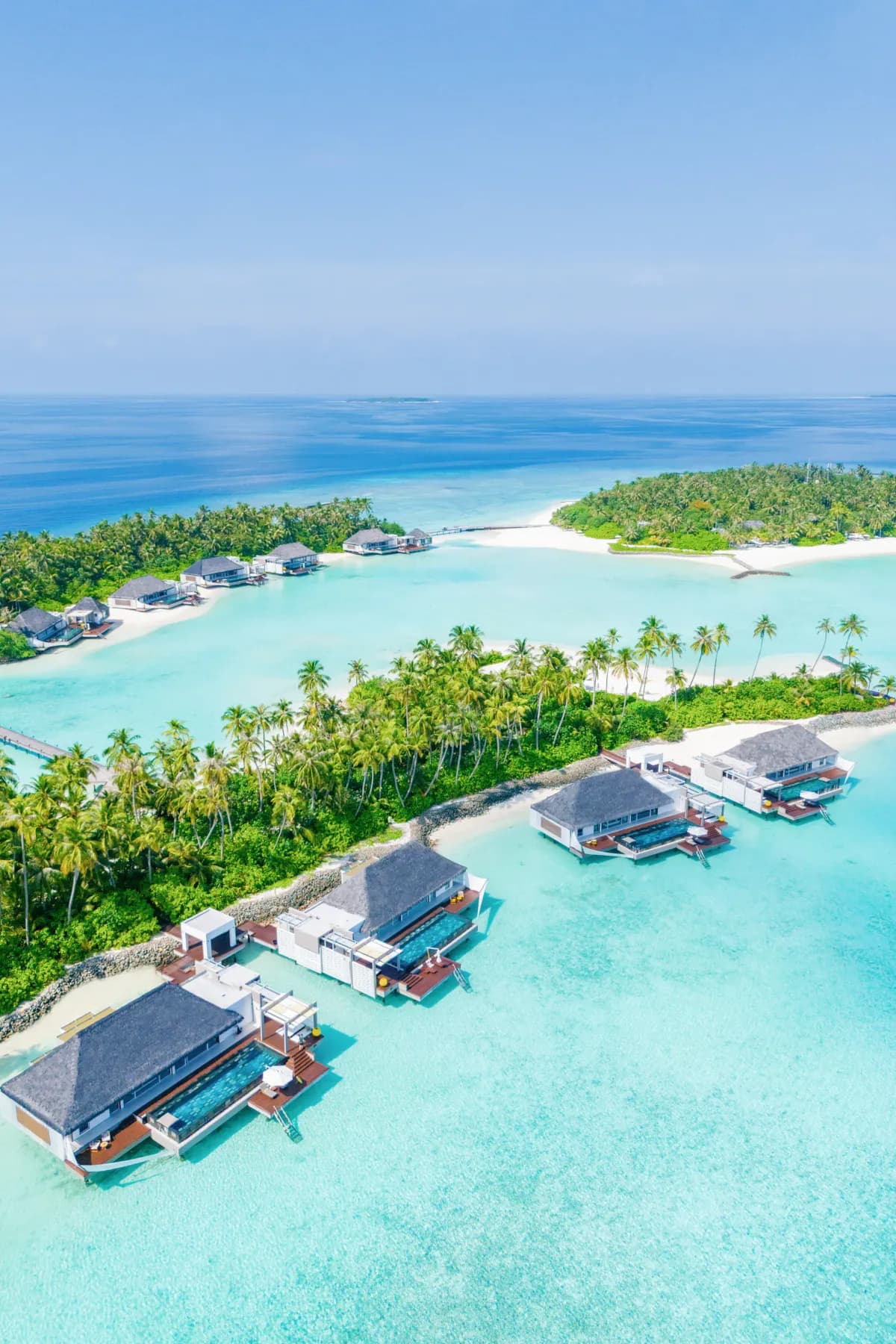
Cheval Blanc Randheli
The LVMH alternative one atoll south, with French-luxury-house DNA and the country's strongest food programme at 1947.
Check rates on Expedia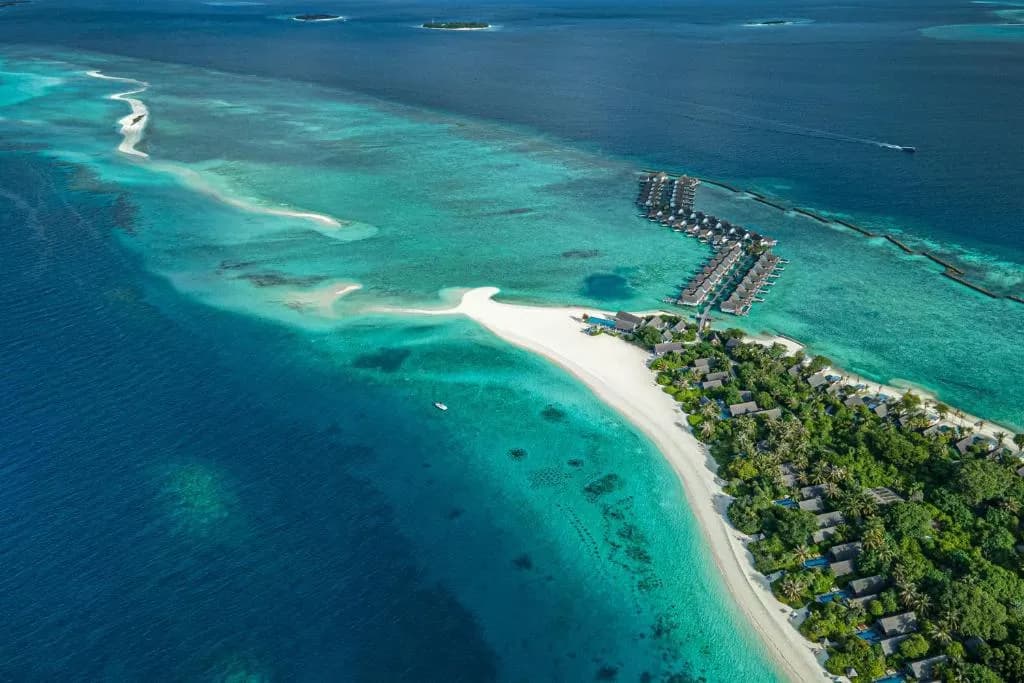
Four Seasons Landaa Giraavaru
Family-strength chain-luxury in Baa with the Marine Discovery Centre and the Ayurvedic programme.
Check rates on Expedia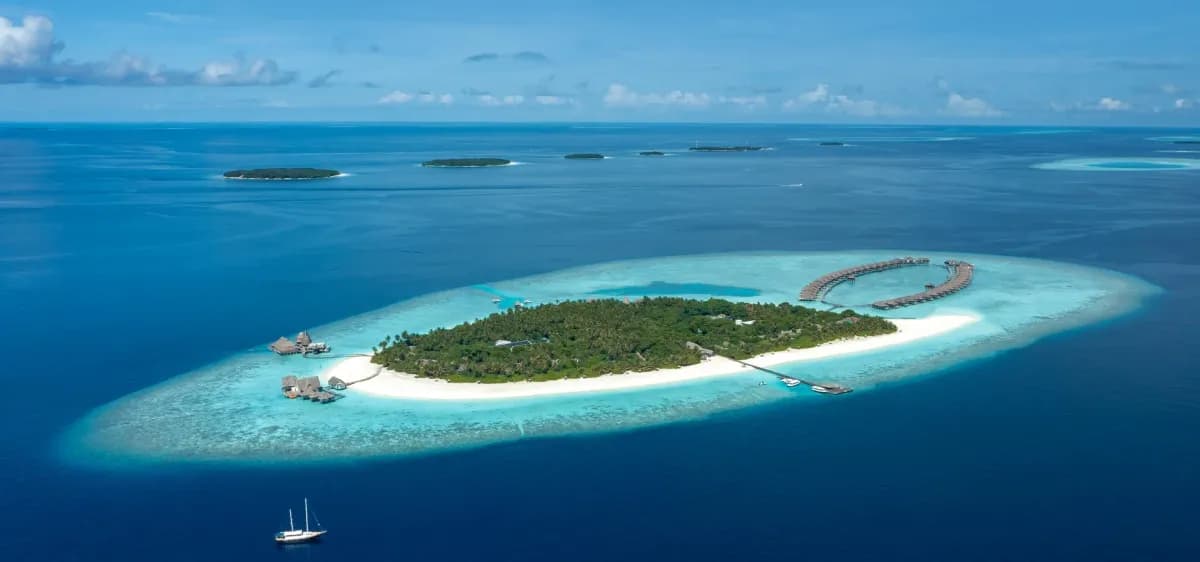
Anantara Kihavah
Polished Baa property with the SEA underwater restaurant and the Sky Observatory.
Check rates on ExpediaHead-to-head comparisons
Frequently asked
- How does JOALI Maldives compare to its sister property JOALI BEING?
- JOALI Maldives is the conventional art-led ultra-luxury resort with a full dining and alcohol programme. JOALI BEING is the wellness-immersion island, with no alcohol on the property and a structured wellness pathway as the spine of the stay. The two are operated by the same group on separate islands in Raa Atoll, with a 15-minute speedboat between them; the split-stay across both is the chain's distinctive offering.
- Is the art programme genuinely the differentiator?
- Yes for a guest who follows contemporary art. The commissioned roster includes Studio Glithero, Misha Kahn, Porky Hefer, and Kamruzzaman Shadhin; the catalogue runs to roughly 30 site-specific pieces. The programme is documented on the property microsite. For a guest indifferent to art, the differentiator does not register and the rate premium is uncomfortable.
- How does the food programme compare to Cheval Blanc Randheli?
- Cheval Blanc Randheli sits at a clear tier above on the food axis. 1947 is the country's strongest food-led restaurant; the cellar runs to 4,000+ references with LVMH-Michelin alumni in the kitchen. JOALI's four-venue programme is competent but does not match that depth. For a food-led trip, Cheval Blanc; for an art-led trip with competent food, JOALI.
- Is the diving worth choosing the resort for?
- Raa Atoll's reefs are good, and the on-property PADI 5-star operation is competent. But the dive programme is not the property's strongest suit and the boat fleet is smaller than the Laamu or Vakkaru equivalents. For a divers-primary trip, Six Senses Laamu or a South Ari dive-specialist resort delivers more depth.
- What's the kids' programme like?
- The Baa Baa Bin Bin kids' club (ages 4-12) is competent but not the property's strongest feature. The villa stock also leans toward two-adult occupancy. Families with school-age children for whom kids' programming is a deciding feature are better served at Four Seasons Landaa Giraavaru or Six Senses Laamu.
- Should I split-stay with JOALI BEING or pick one?
- Split-stay if the trip is ten nights or longer and a structured wellness retreat is part of the brief. Otherwise, pick the property that matches the dominant intent: JOALI Maldives for the art-led conventional luxury stay, JOALI BEING for the wellness-immersion retreat. The split-stay sequence (JOALI then BEING) reads slightly stronger in trip-report data than the reverse.
Last verified 2026-05-28. Next refresh 2026-08-28. Edited by Linus Halberg.