Over-water villas, honestly
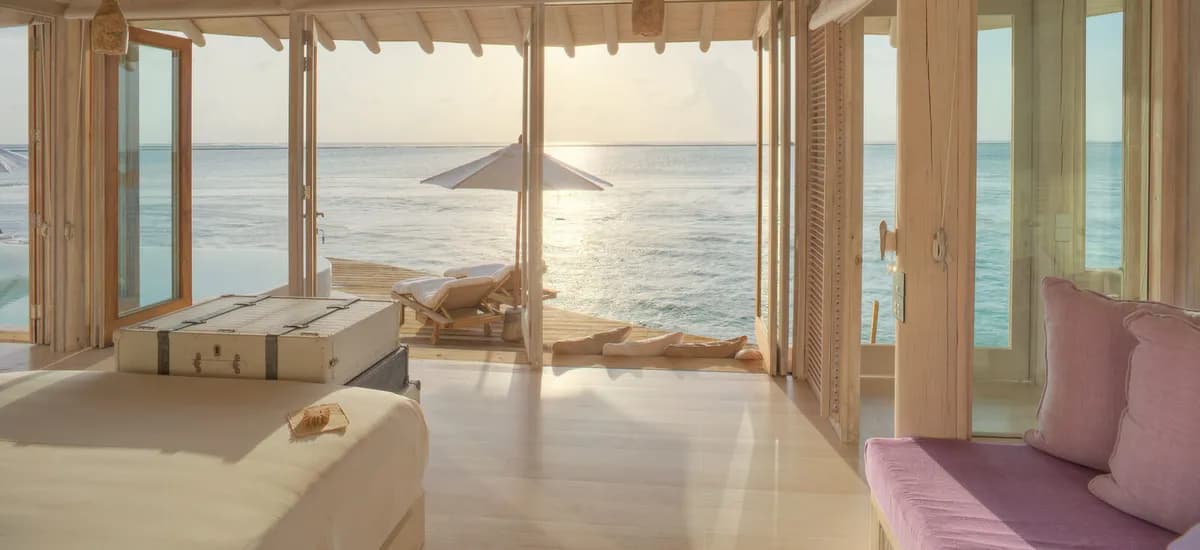
The over-water villa is the photograph the marketing wants. It is the right room about half the time. A first-floor over-water in the dry season runs hot. Under-deck snorkelling that brochures promise sits over coral in fewer than 40% of resorts. Repeat guests on trip-report forums tilt toward beach-pool villas after a second stay. Read also: Soneva Jani villa architecture and food programme for the slide-villa anchor, Cheval Blanc Randheli LVMH spa and villa programme for the LVMH-tier comparator, Gili Lankanfushi villa setting for the over-water-only configuration, and Velaa Private Island villa stock for the owner-operator villa shape.
Why the over-water villa is the photograph
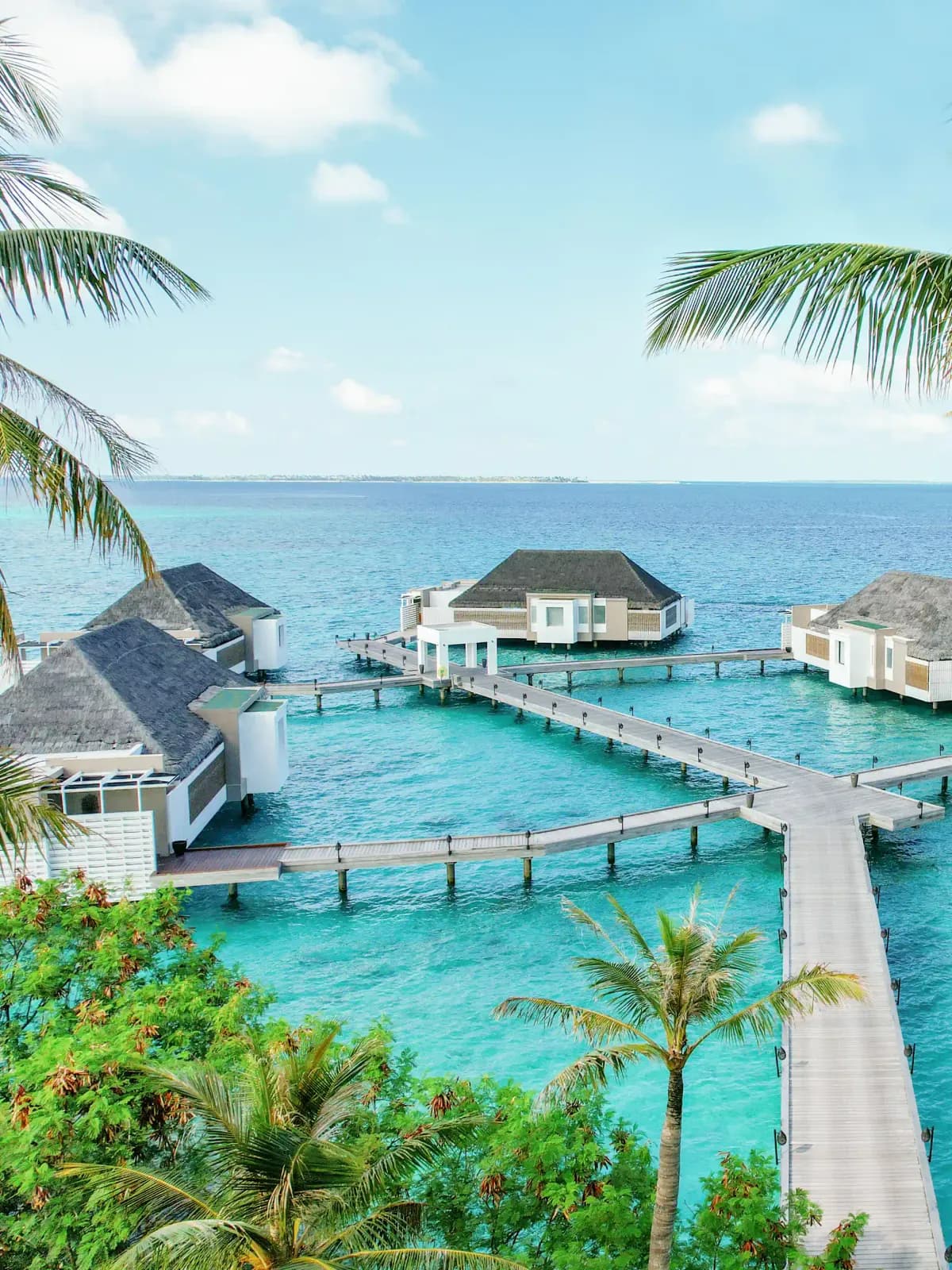
The over-water villa is the image the Maldives tourism economy was built on. The colour of the lagoon, the wooden deck, the four-poster bed open to the water, the curving slide or the glass-bottom panel or the retractable roof, the moment of stepping straight off the bedroom into the sea. It is the photograph that converts a booking, and it is the photograph that shows up in nine out of ten honeymoon marketing reels. None of which makes it the right room for every couple every time.
The structural truth is this: the country has roughly 8,000 over-water bedrooms across 160-odd resort properties. The format was pioneered at Vadoo (now Adaaran Prestige Vadoo) in 1986, with Kuramathi adopting it soon after and Baros following in 1992; the modern photographic vocabulary was set by Soneva Gili (now Gili Lankanfushi) in the early 2000s. Every operator has been iterating since. The result is a market in which the over-water villa is the default high-end product, the default upgrade target, and the default expectation for a Maldives honeymoon.
It is also a market in which the over-water villa is wildly variable in quality. Some are configured for the photograph and against the daily-life ergonomics. Some sit over live coral; most sit over sand or rubble. Some catch the prevailing wind sideways and run hot; some catch it directly and stay cool. The point of this guide is to translate the marketing photograph into the practical detail a couple needs before booking.
The four subtypes of over-water villa
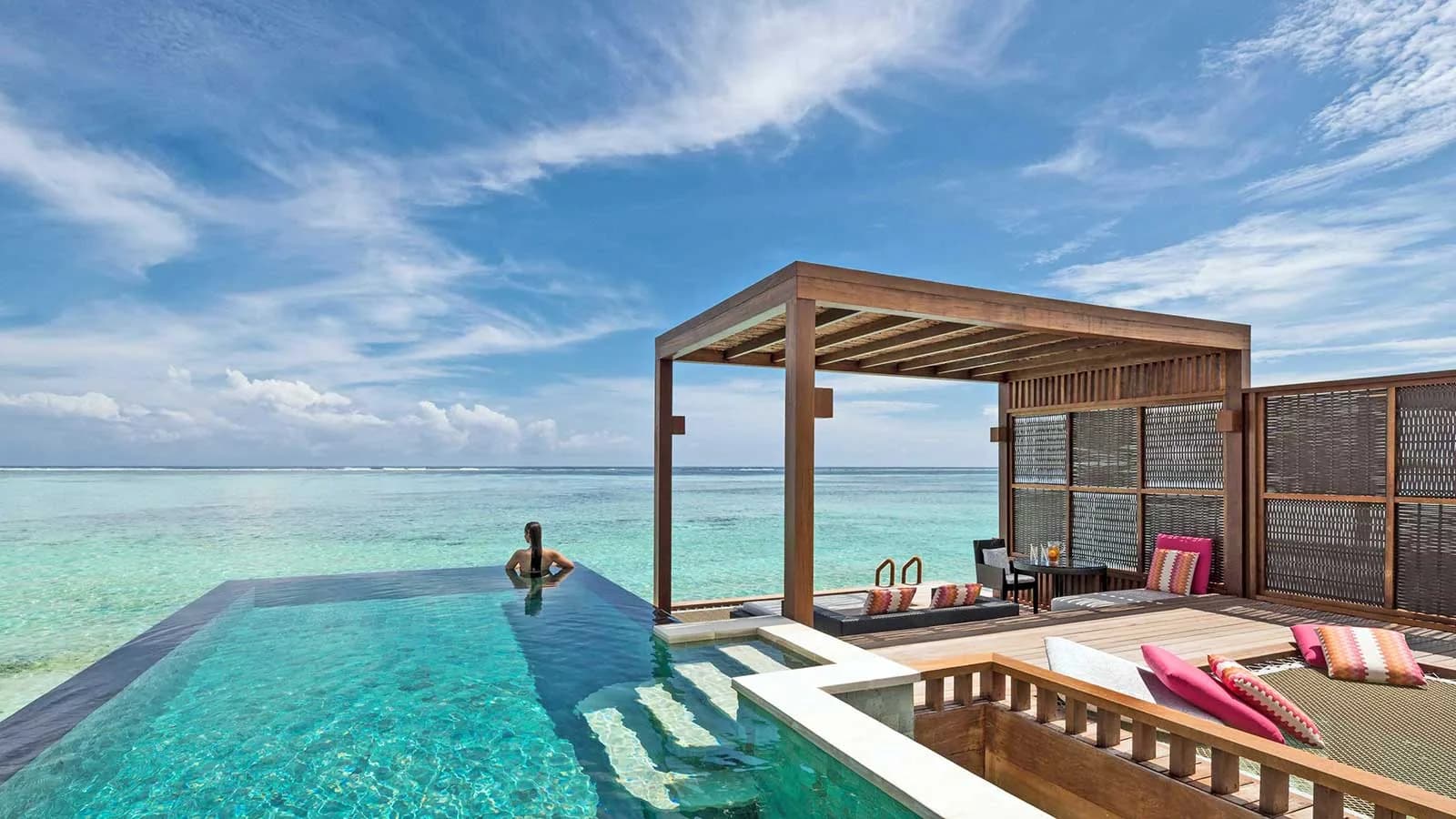
The first useful split is by orientation: lagoon-edge (closest to the shore, shallowest water, easiest entry), deep-water (further out, deeper water under the deck, more privacy from neighbours), sunset-side (oriented west, the headline view, often the price premium category), and garden-back (water-villa on the back side of the lagoon, lower-priced, often the best value for the under-deck water condition).
Lagoon-edge over-waters are the entry-tier category at most resorts. Water under the deck is two to three metres deep, the swim-down ladder reaches sand, snorkel quality is poor because the resort dredged the channel for boat access. Privacy from the boardwalk is moderate. These villas are configured for first-time visitors who want the photograph without the deep-water nerves.
Deep-water over-waters sit further along the boardwalk, with four to six metres under the deck and a higher chance of live coral on the bottom. The swim-down is more committed (no sand to stand on), the snorkel quality is meaningfully better, and the privacy from neighbouring villas is real. Couples who specifically want to use the under-deck water should pay for this tier.
Sunset-side over-waters are the photograph category. The orientation captures the western sunset directly from the deck. The premium is real and it is justified for one specific reason: the trade winds across the central atolls run primarily from the east during the dry season, so the western-facing villas catch the breeze sideways rather than head-on, which keeps them cooler in the afternoon than the equivalent sunrise-side villa. The view is the marketing line; the breeze is the actual comfort case.
Garden-back over-waters are the underrated category. They sit on the back side of the lagoon, often facing the resort's interior or the boardwalk rather than open water. The price is typically 30-40% lower than the sunset-side equivalent. The trade-off is the missing sunset photograph; the upside is that this category often sits over the deepest, cleanest water at the resort because the back-lagoon has not been dredged for boat traffic.
The under-deck reef question
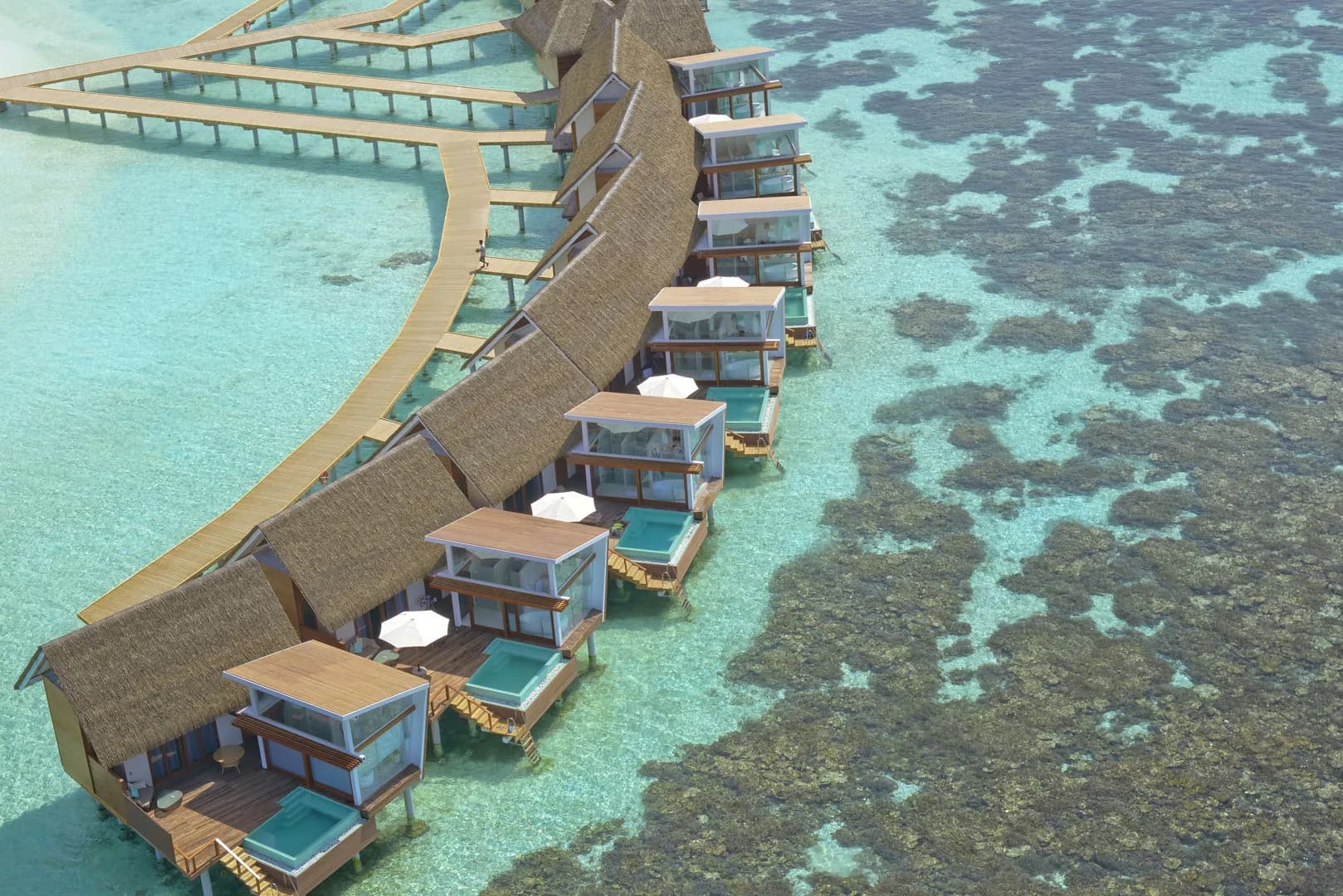
The marketing photograph usually shows fish swimming under the deck. The trip-report data over the last three seasons shows that fewer than 40% of resort properties have live coral under their over-water villas; the rest sit on sand, rubble, or dredged channel. The reef status under your specific villa is the single most important variable for couples whose honeymoon plan involves using the under-deck water.
Properties where the under-deck reef is consistently live: Gili Lankanfushi (the Crusoe Residences face into a protected lagoon section), Six Senses Laamu (the Olhuveli house reef extends close to the over-water row), Velaa Private Island (the dedicated reef protection programme has documented recovery under the villa platform), Cheval Blanc Randheli (depending on which villa; the eastern row sits over live coral, the western row over sand).
Properties where the under-deck is typically sand or dredged channel: most North Malé resorts (the boat-traffic density has dredged the channels), most South Malé resorts, the central-atoll mid-tier (Vakkaru, Amilla, the Anantara properties). At Anantara Kihavah specifically the under-deck shifts seasonally with the lagoon current; ask the reservations desk for the current state.
Practical advice: before you confirm the booking, ask the reservations desk for the most recent reef-monitoring photograph under the villa category you've chosen. The serious operators will send it; the operators who refuse are telling you something about their answer.
The seasonal angle: which direction faces which monsoon
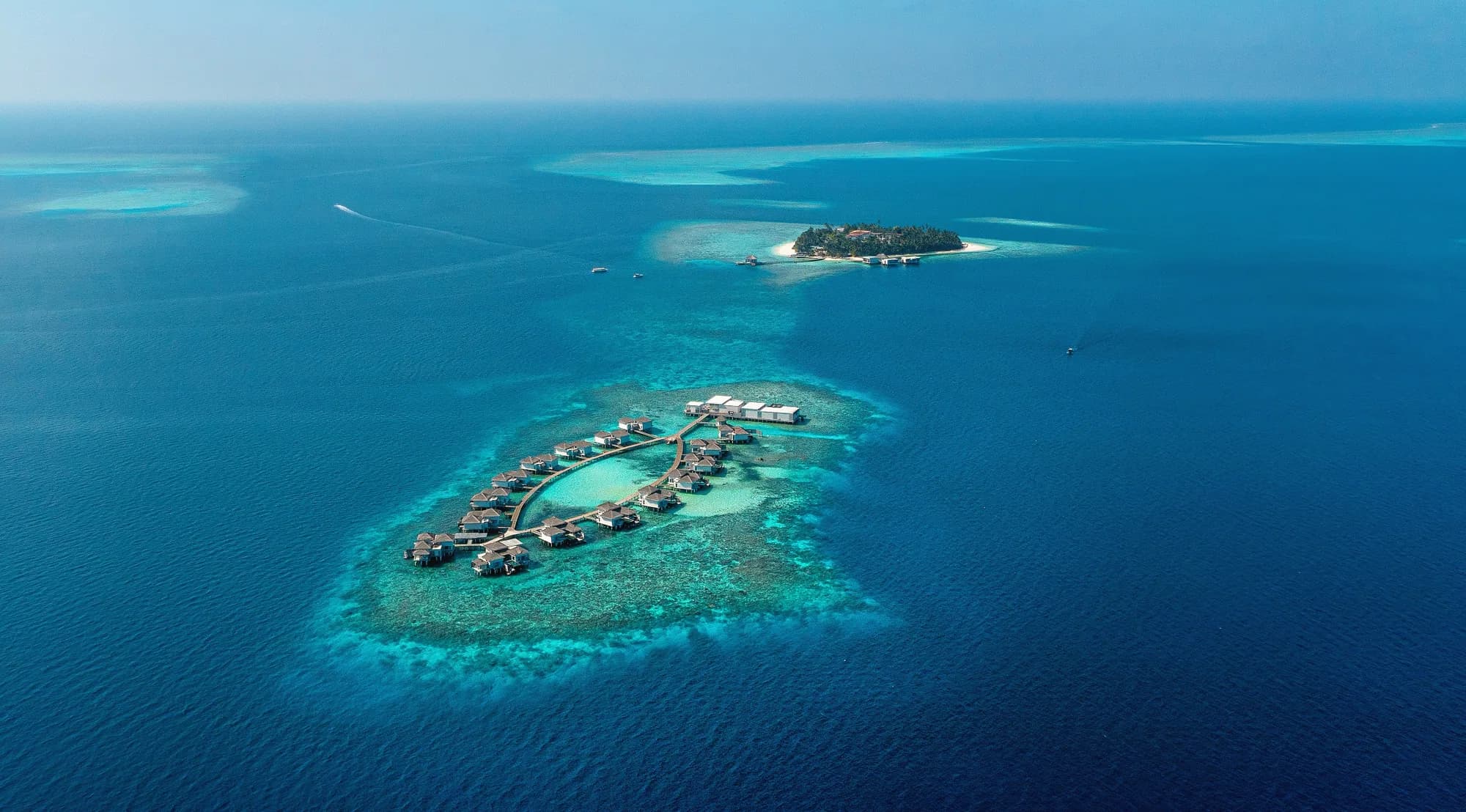
The Maldives runs two monsoons: the northeast (Iruvai), from December through April, and the southwest (Hulhangu), from May through November. The northeast monsoon is the dry season; the southwest is the wet season. Wind direction shapes which side of the resort island sits in the lee and which side catches the swell.
During the northeast monsoon (December-April), eastern-facing over-water villas catch the wind directly. The water is choppier, the breeze through the villa is fresher, and the swim-down can be uncomfortable on rough days. Western-facing villas sit in the lee, the water is glass-flat, the under-deck swim is the postcard. This is why the sunset-side premium is real during the peak December-March window.
During the southwest monsoon (May-November), the orientation inverts. Western-facing villas catch the wind and swell directly; eastern-facing villas sit in the lee. For a stay timed for May-October (the manta and whale shark window for marine event travellers), the sunrise-side villas actually deliver the calmer water. The premium that the marketing pushes for sunset-side becomes a wet-season disadvantage.
Honest advice: if your stay is during the dry season, pay for sunset-side. If your stay is during the wet season, ask for sunrise-side and save the premium. The marketing photograph is identical; the actual experience inverts.
Brand-by-brand signature features
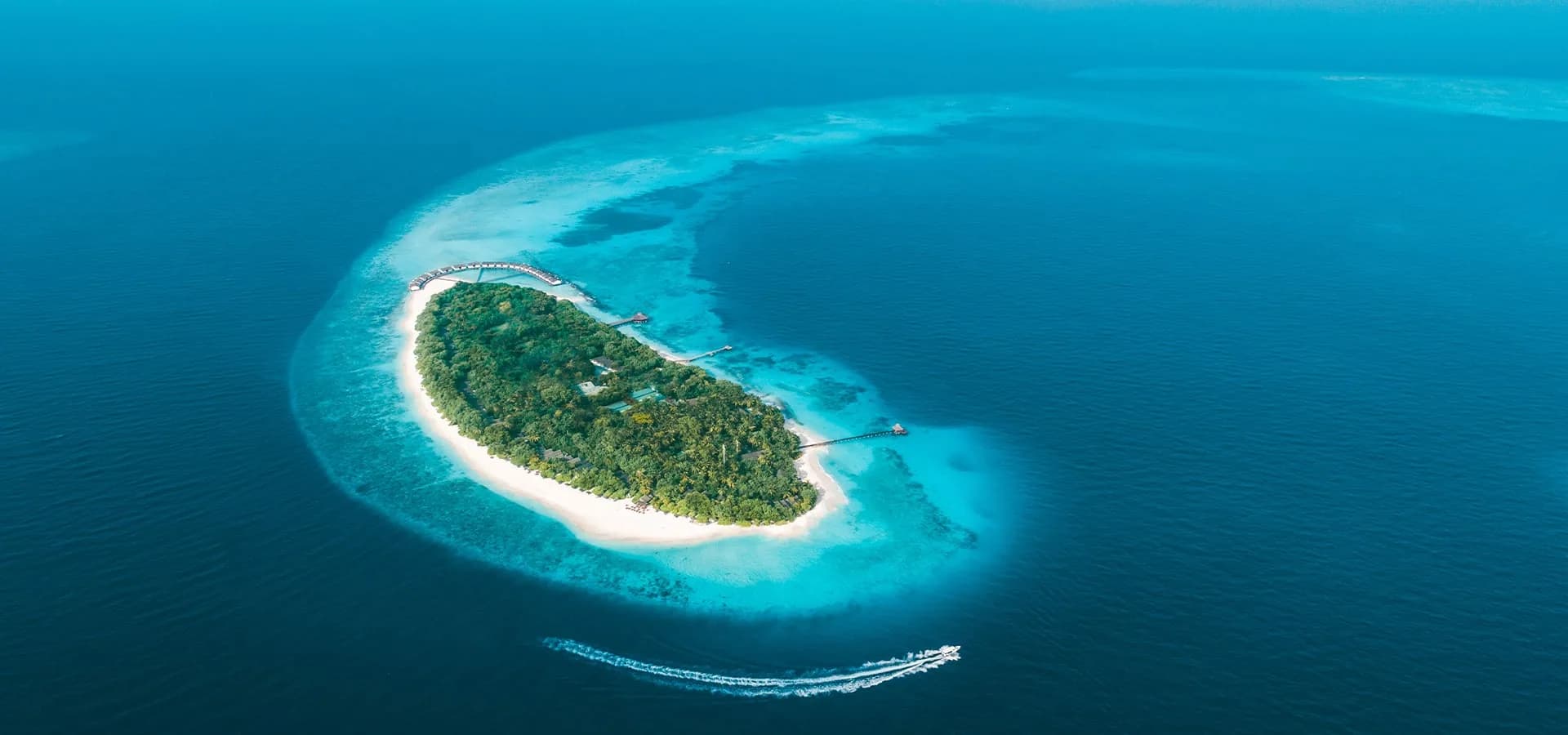
The Soneva over-water villas at Soneva Jani carry two property-specific features that no peer has fully matched: the retractable bedroom roof (manually opens to reveal the sky directly over the bed) and the curving wooden slide from the deck into the lagoon, available on the Water Retreat and Water Reserve categories. The slide reads as a children's feature in the marketing, but the trip-report data shows it is used most frequently by adult couples in the late afternoon.
The JOALI over-water villas carry the contemporary-art programming as a property signature. Several villas integrate site-specific commissioned pieces; the JOALI BEING sister property emphasises wellness infrastructure (sleep doctor consultations, in-villa wellness equipment) over decorative art. Both JOALI properties tilt toward sunrise-side as the headline category, which inverts the typical sunset-premium pattern.
Cheval Blanc Randheli's over-water villas carry the LVMH luxury-house DNA: French luxury fabrics, a Guerlain in-villa amenity programme, and an integrated lounge deck that extends the over-water platform with a separate seating area beyond the bedroom and pool. The eastern-row villas sit over live coral; the western row faces the sunset but sits over sand. Operational polish is the highest in the country.
Six Senses Laamu's over-water villas tilt toward the sunset side along the western boardwalk, with the Yin Yang surf break visible from the deck during the southwest season. The villa furniture is configured for daily-life use rather than the photograph; trip reports consistently rank Laamu over-water villas as the most comfortable to inhabit, even if the photographic identity is less iconic than Soneva's slide or JOALI's art.
Gili Lankanfushi's Crusoe Residences are the country's most expensive over-water category. The villas sit on individual platforms reached only by boat, not by boardwalk, which is the single most-private over-water configuration in the country. The under-deck water is consistently in the deepest, cleanest condition.
First floor versus ground floor
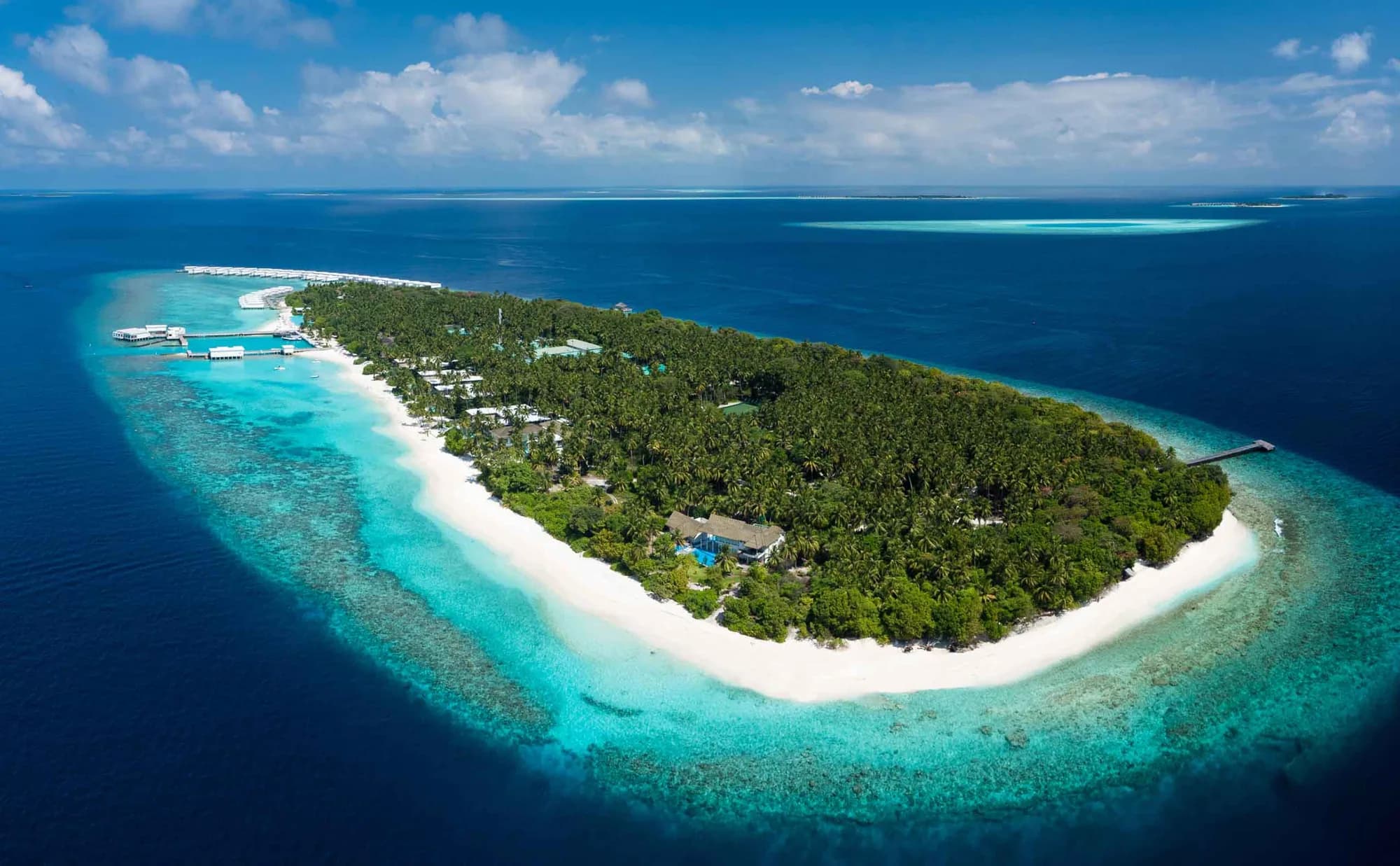
A handful of resorts (Anantara Kihavah, Amilla, several of the newer South Malé properties) offer first-floor over-water villas, with the bedroom stacked above the lounge. The marketing line is that the elevated bedroom delivers a wider view; the practical reality is that the first-floor configuration runs hot during the dry-season afternoons because the bedroom sits above the cooler ground-floor mass and the sun heats the upper deck directly.
Trip-report data over the last three seasons shows a consistent pattern: the first-floor category receives 12-18% more complaints about afternoon heat than the equivalent ground-floor category at the same property. For couples planning to spend afternoons in the villa rather than dispatched on excursions, the ground-floor configuration reads better despite the less-dramatic photograph.
Exception: at resorts where the over-water villas include a separate air-conditioned bedroom pavilion (rather than the open-plan configuration), the first-floor heat problem is operationally managed. Velaa Private Island and Cheval Blanc Randheli both fall into this category.
Booking timing and rate windows
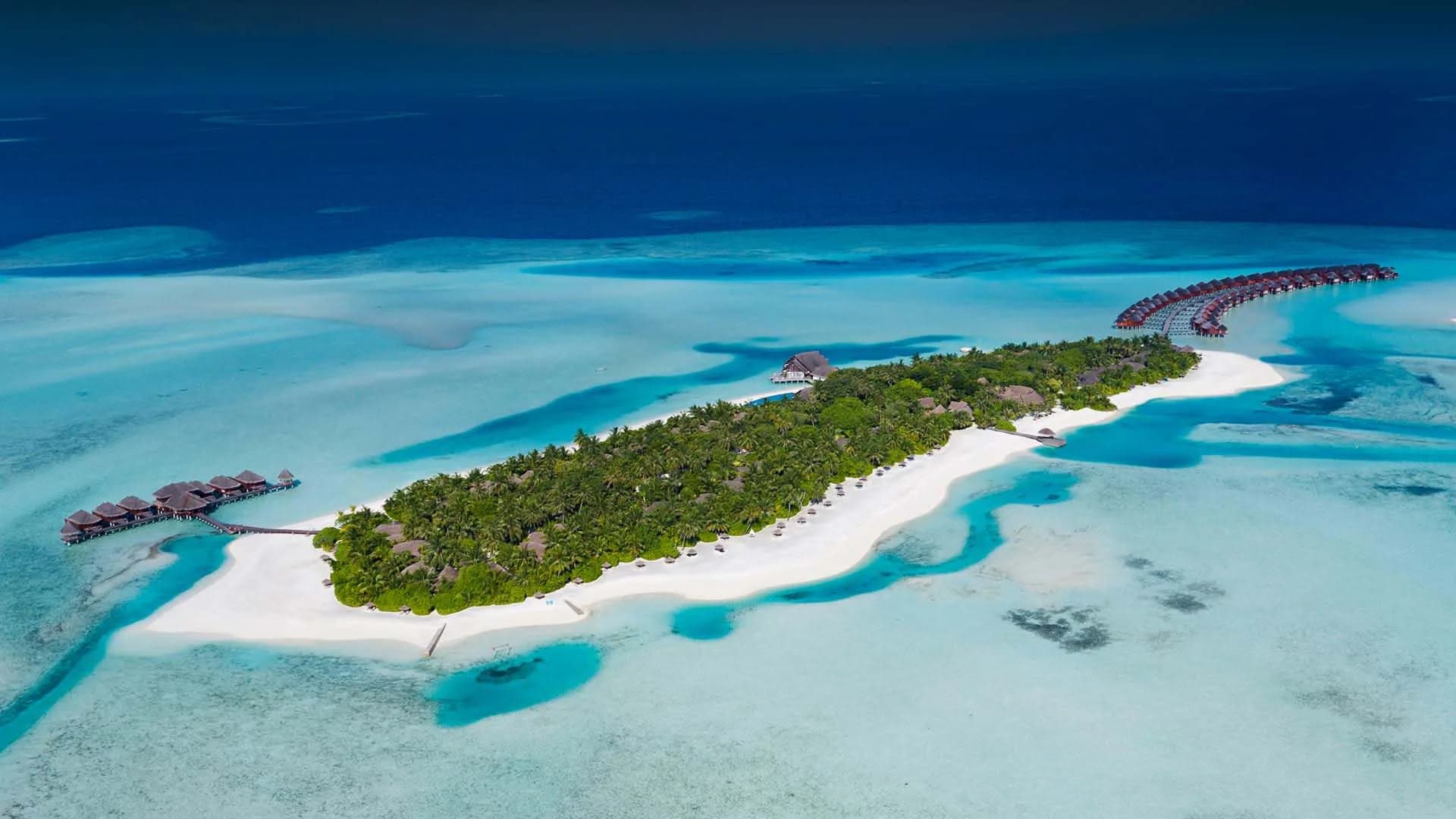
Over-water villa categories sell out earlier than land-side categories at every premium property. The lead time during the December peak runs nine to twelve months; February-March books out six to nine months out; September-November (the value window) typically has the latest availability and the strongest negotiation room.
The single largest rate-jump pattern: the upgrade from Beach Villa with Pool to Lagoon-Edge Over-Water at most properties is roughly 15-25%, while the upgrade from Lagoon-Edge Over-Water to Deep-Water or Sunset-Side Over-Water is another 25-40%. The marginal expense of the second upgrade buys meaningfully more (under-deck water quality, privacy, sunset photograph) than the marginal expense of the first.
Practical booking advice: if the budget is constrained, skip the entry-tier over-water and book a Beach Pool Villa with the savings. If the budget allows the second upgrade, take it; the Lagoon-Edge category is the most reliably underwhelming over-water configuration in the country.
The case for the beach-pool villa instead
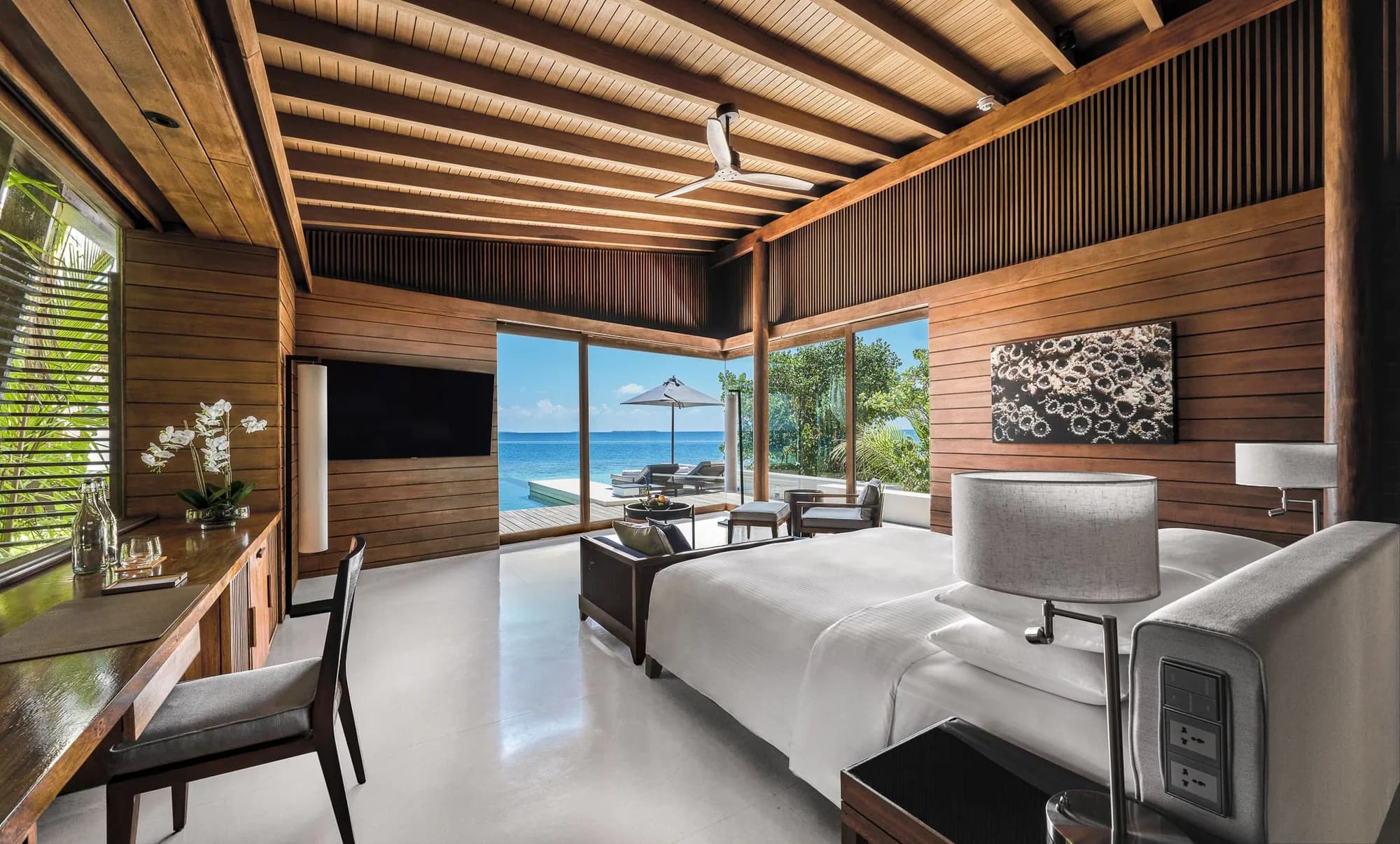
Trip-report data across the last three seasons shows a consistent pattern at the eco-luxury tier: repeat guests at Soneva, Six Senses, and Cheval Blanc tilt toward beach-pool villas on their second or third stay, having booked over-water on the first. The reason cited most often is the morning shape of the holiday: a beach-pool villa delivers a private pool with shade and direct beach access, which makes the slow-coffee morning that most couples actually want into the practical default.
Beach-pool villas also handle weather better. During a southwest-monsoon afternoon rainstorm, the beach-pool villa is comfortable; the over-water deck is exposed to wind-driven rain on three sides. For stays during the wet season, the beach-pool configuration removes a meaningful chunk of the rain-induced trip risk.
Recommendation, finally: book the over-water for one Maldivian stay. Photograph it. Use it. Then on the next stay, book the beach-pool and notice how much more of the holiday you actually experience.
The comparison table
Over-water villa categories across the properties we have read in depth. "Under-deck reef" is the most recent reading; conditions change with seasonal currents and any active reef-protection programme.
| Resort | Category | ~Size | Signature | Under-deck reef |
|---|---|---|---|---|
| Soneva Jani | Water Retreat with Slide (1BR) | 410 m² | Retractable bedroom roof + slide into lagoon | patchy |
| Soneva Jani | Water Reserve with Slide (1BR) | 670 m² | Larger footprint + private pool + slide | patchy |
| Soneva Fushi | Cinema Paradiso Water Retreat | 360 m² | Floating cinema view + over-water bedroom | yes |
| Six Senses Laamu | Laamu Water Villa with Pool | 175 m² | Sunset-side, surf-break visible in season | yes |
| Six Senses Laamu | Sunset Beach Villa with Pool | 200 m² | Sunset-side over-water, infinity-edge pool | yes |
| Cheval Blanc Randheli | Water Villa (eastern row) | 240 m² | Guerlain amenity programme + live coral under deck | yes |
| Cheval Blanc Randheli | Garden Water Villa | 220 m² | Lower-priced category, courtyard-side | sand |
| Gili Lankanfushi | Crusoe Residence | 750 m² | Boat-access-only individual platform, most private over-water in country | yes |
| JOALI Maldives | Luxury Water Villa with Pool | 240 m² | Art-led design, integrated lounge deck | patchy |
| Anantara Kihavah | Over-Water Pool Villa | 258 m² | Underwater restaurant on property + glass-bottom panel in villa | patchy |
| Velaa Private Island | Water Pool Villa | 250 m² | Czech-owned ultra-luxury, dedicated reef protection programme | yes |